
Artistic Practice
Fell returned to the same places repeatedly. Interiors, streets and landscapes are shaped through thresholds and framing devices — doors, windows, stairwells, reflections and horizon breaks — that stabilise space while holding the scene within lived experience. These structural means recur from early London prints to later interiors and Gascony landscapes.
“For me, art is being able to successfully communicate one’s sense of wonder.”
How the Work Was Made
Observation
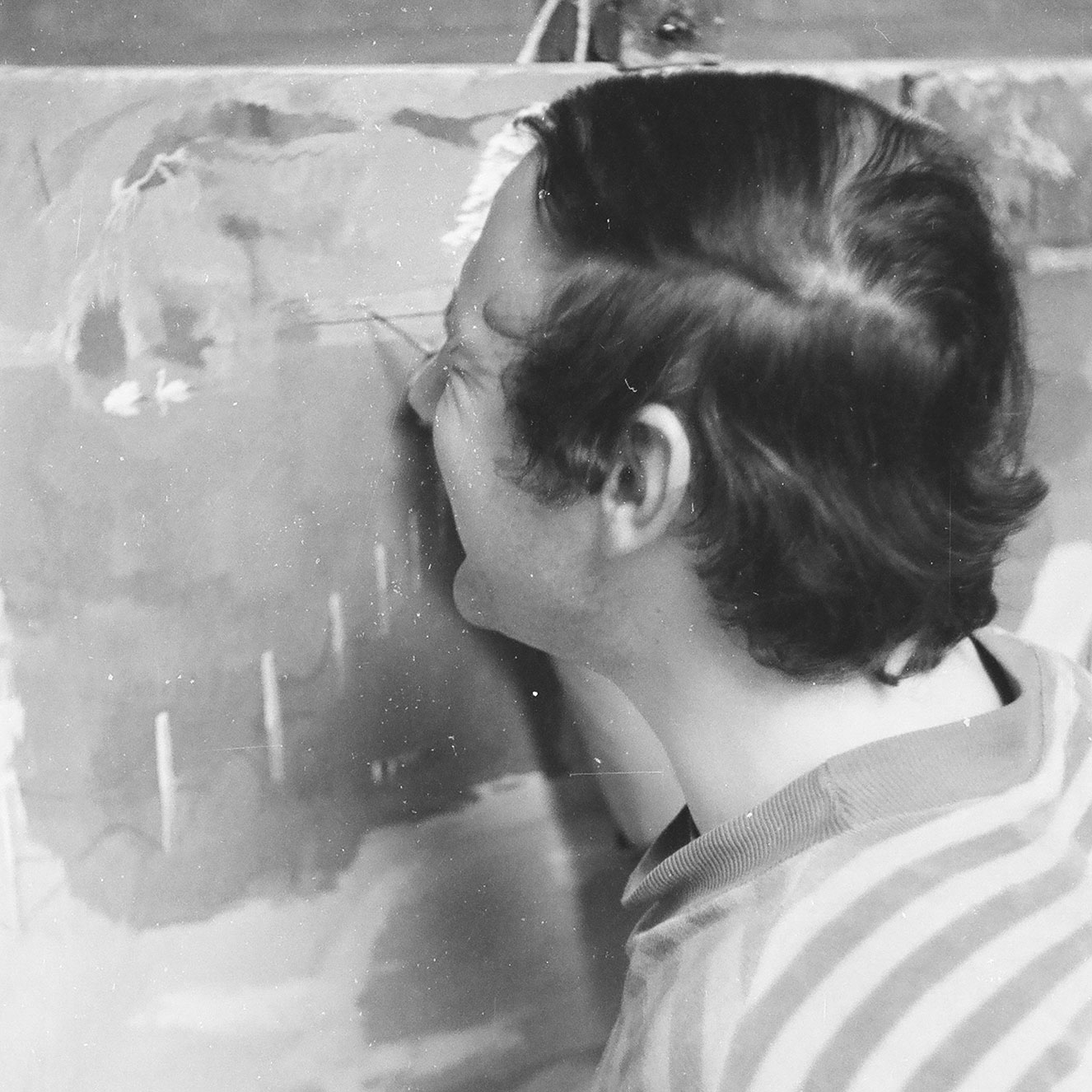
Observation was the starting point. Fell drew from life. In the studio, drawings were reworked and combined until the composition settled into balance. A single image may hold more than one observed moment.
Structure and construction
Drawing was central. Fell typically established an overall spatial armature early — windows, staircases, doorways, railings and horizon lines — before resolving incident and detail. Figures and settings are shaped within this setting.
Printmaking logic
Etching and aquatint encouraged thinking in limits: plate size, tonal stages, the descriptive weight of a line. These constraints remain visible in the paintings, where space is often planned, constructed and compressed through graded tone, blocks and precise edges.
Tone and restraint
Colour and light are used selectively. Fell favoured limited tonal ranges and gentle contrasts, allowing meaning to emerge through placement, repetition and interval rather than overt narrative or expressive effect.
“One is dealing with earthly things which are touched by heaven…”
— Michael Fell
Together, these elements describe a practice grounded in drawing, shaped by printmaking, and sustained by prolonged attention to familiar places.
Notes on Language and Explanation
Fell was reluctant to explain his work. Friends recall a quiet seriousness balanced by dry humour. Writing in 1996, he described being asked to talk through a painting and finding himself “totally tongue-tied,” before being gently rescued by his friend, the artist Peter Coker, who observed: “I am sure Michael and the picture have talked it through….”
This hesitation was not evasiveness but conviction. Fell believed that too much explanation could disturb the artistic balance achieved in the images he had created — a belief consistent with the discipline evident in the work itself.
Position within Post-war British Art
Fell worked within a post-war British figurative tradition shaped by sustained drawing from life and close attention to shared spaces.
Across more than six decades, his habits, forged within that tradition, remained consistent despite changes of subject and location. Interiors, urban scenes and landscapes are built through related means, giving the work a recognisable coherence.
For documented public holdings and catalogue details, see Collections.
Image credits
Photograph © Estate of Michael Fell
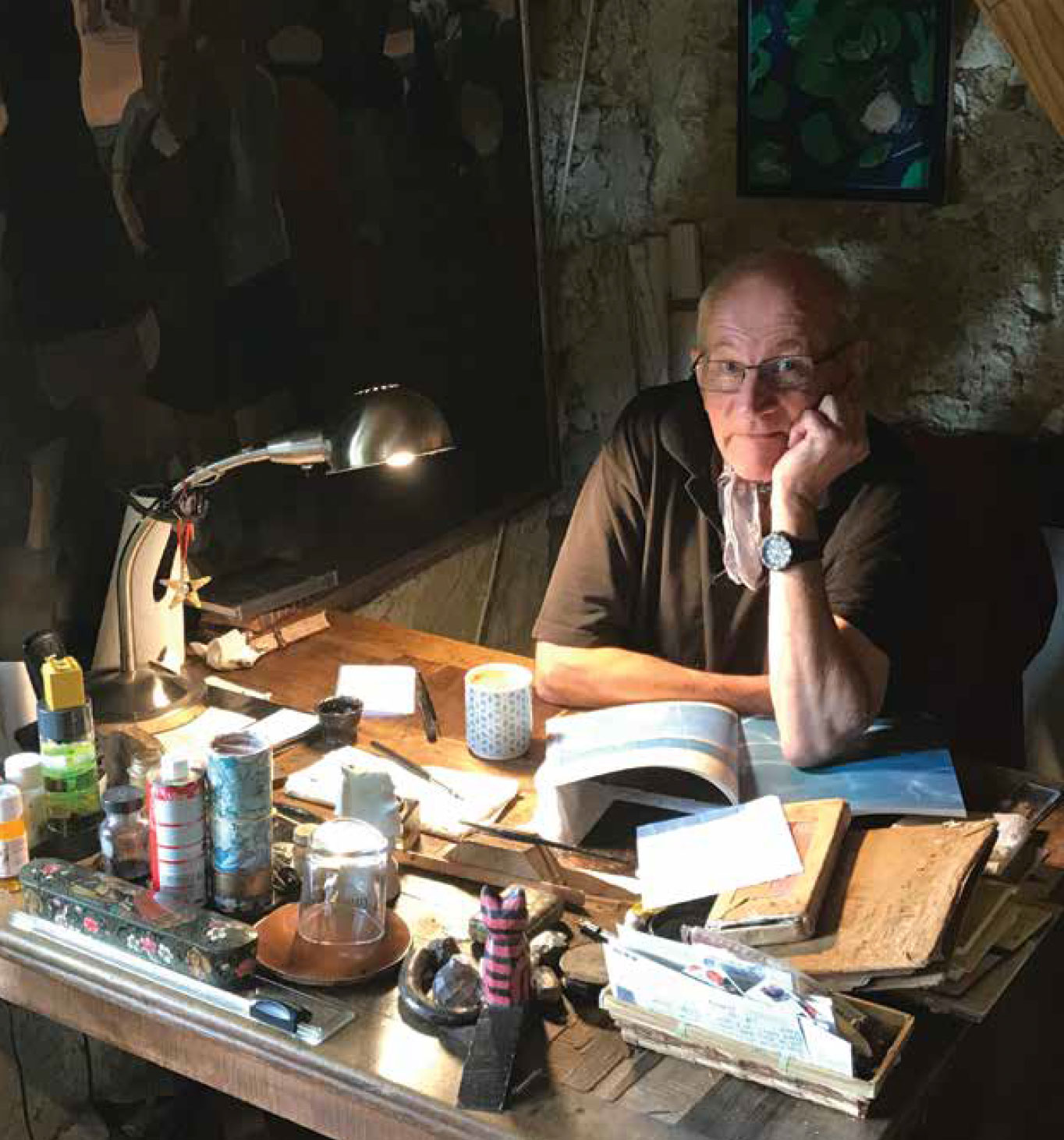
Michael Fell, Barrère, Gers, 2017
Photograph © Marek Mierzejewski